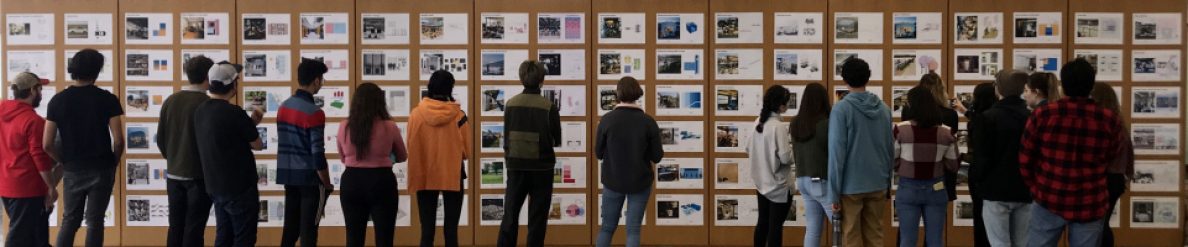
For my project I chose to focus on the pushing and pulling of elements from an implied space. When working on the collage portion of this assignment, I noticed how depth played a large role in the facades. When translating this into my final house design I drew inspiration from a precedent study in Philadelphia … Continue reading Final Review: Tom Novak
Author: tnovak10
Phase 5.1: Case Study (LoftCube)
Thomas Novak & Sarah Kay Stephens LoftCube | Werner Aisslinger | 365 sq. ft The Flexibility of an Open Plan When privacy is necessary (Bathroom)The benefits and disadvantages of using a lot of glass (Connection to surrounding vs. non-energy efficient)The use of a grid in house design and room layoutThe use of modular parts for … Continue reading Phase 5.1: Case Study (LoftCube)
Phase 4: Tom Novak
Comments: Add Frames to 3/32" models to see how the frames interact in the aggregationClarify whether green space is public, semi-private, or privateMore Diagrams/ Explanation for framesIn iteration 1, determine what the space between the 4 modules could bePossibly play with the landscape to give the modules a mountainous effect.
Phase 3: Tom Novak
For my assigned neighborhood, I was intrigued by the facades of the buildings and the depth they created. I specifically chose facades with exposed semi-structural elements such as arches, which were prevalent in the area. My goal was to find elements that tied these facades together. With my collage, I represented all of the facades … Continue reading Phase 3: Tom Novak
Phase 1: Tom Novak
Project Team: Tom Novak, Cy Wu, John Mulvey, Lilibeth Arreola
 Hathaway Section - Spring 2020