
Documentation
Architect:
Riken Yamamoto & Field Shop and Kunwon Architects
Location:
Seongnam, Korea
Date Designed:
2005
Date Completed:
2010
Client:
Korean Housing Corporation
Size:
Each unit is approximately 2400 sq ft (varies)
Total square footage of the units is 368,696 sq ft
# of Residential Units:
100 family units
Photographs:


Drawings:



Special Drawings:


Research and Analysis
History:
In 2005, the Korean Housing Corporation held their first design competition for this plot of land to create a development for single family homes in an affordable and efficient way. The Korean Housing Corporation is a government run company that focuses their resources on developing new land areas for affordable housing. This is development is a newly built site that was designed for a specific group of people and the competition focused on this narrative.
Description:
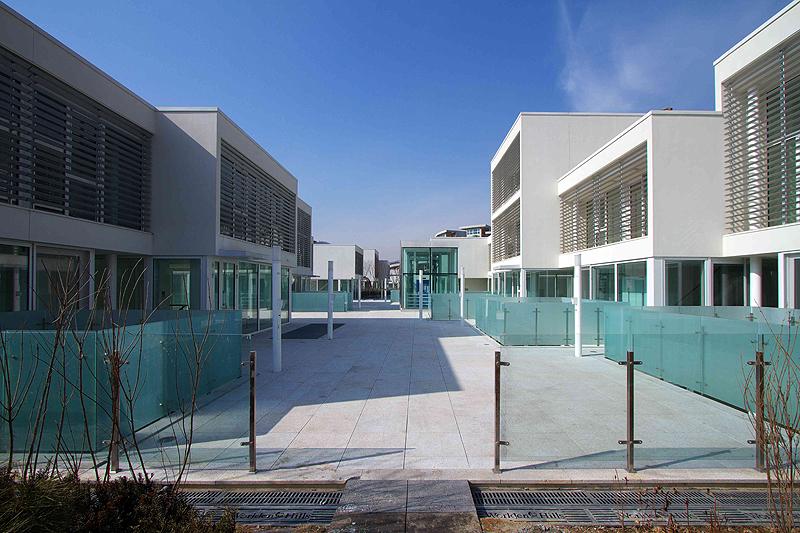
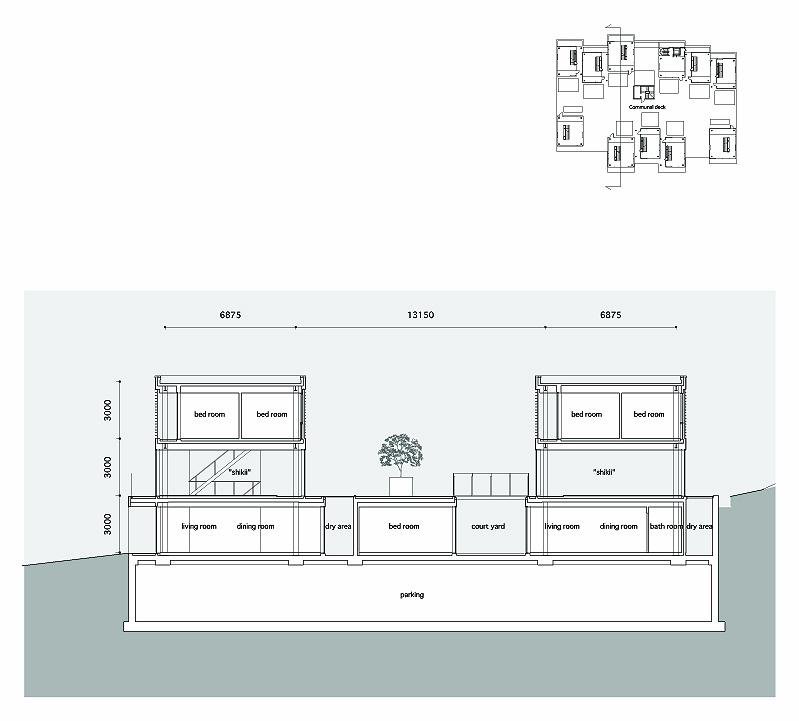
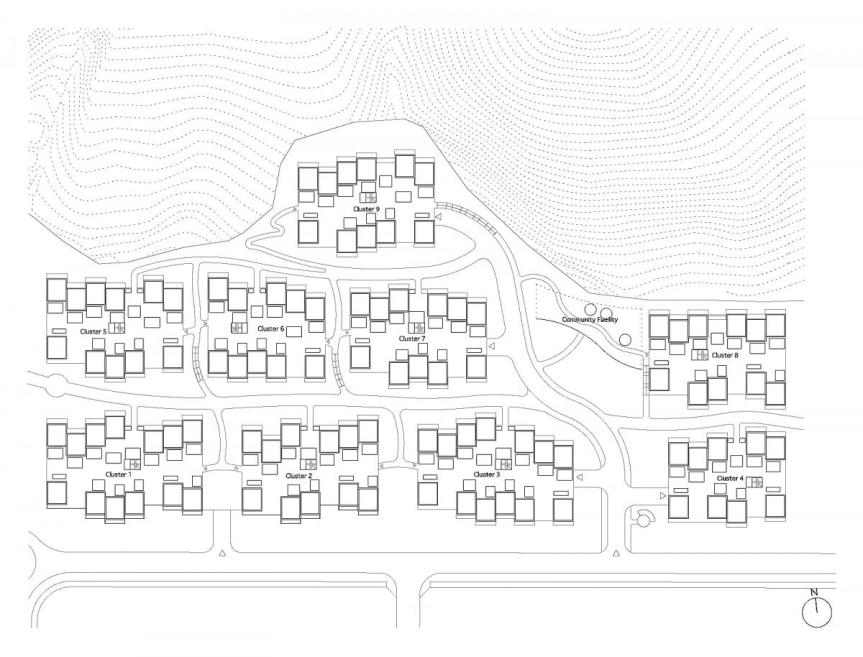
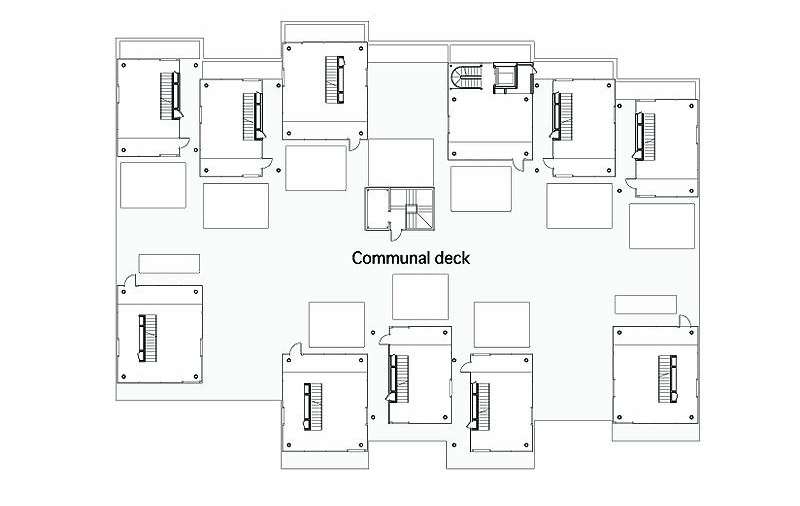
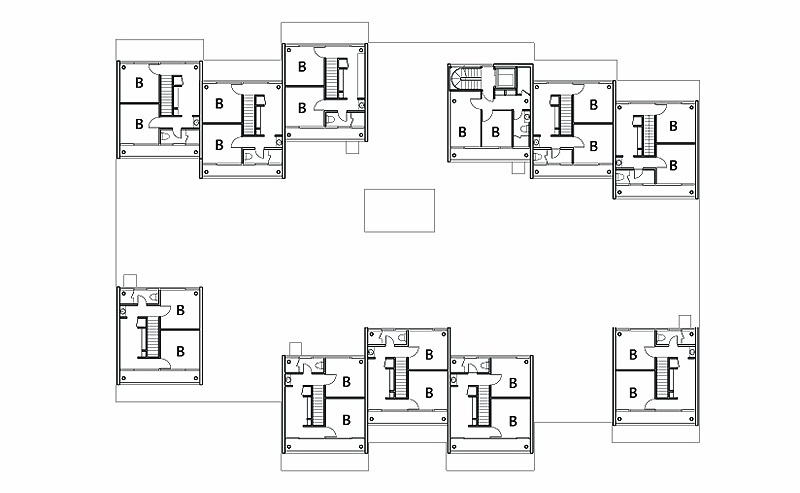
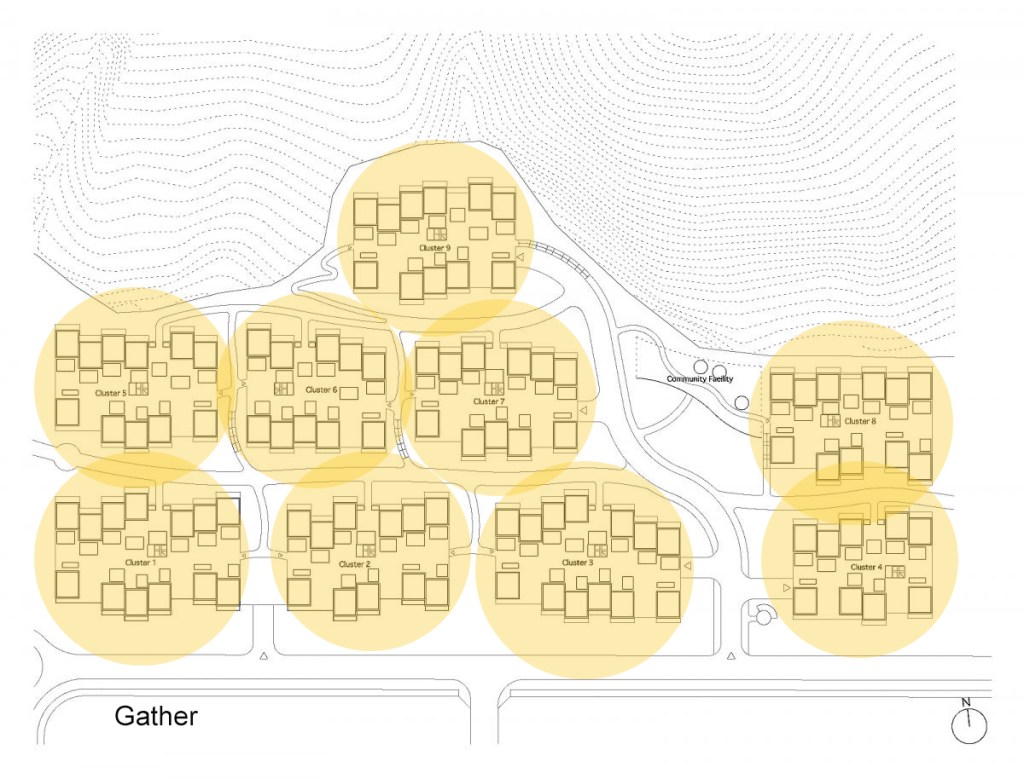
Pangyo housing is a public housing project located an hour and a half from Soul, South Korea. The units are organized in nine groups, with about ten to thirteen in a cluster. The units in each cluster shift at a vertical axis to the contouring of the hill in the site. The houses are multi-leveled with a clear glass level called a ‘shikii’. Riken Yamamoto designed the shikii to be open to a public by a shared deck in each cluster. Yamamoto wanted the residents of the building to see there neighbors and created a sense of public space. Meanwhile, the upper levels are kept private due to the louvers attached to the units.
Diagrams:


Structure and Materials:
The structure of the buildings is comprised of steel beam structure with the incorporation of reinforced concrete.
Interesting Notions:
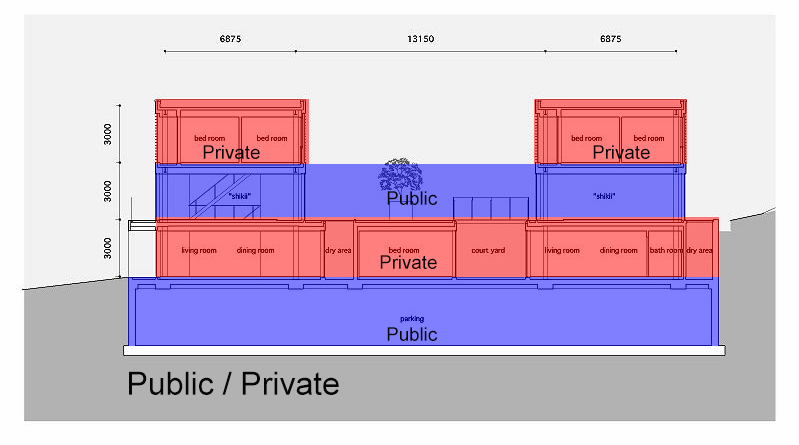
What we found interesting is how the building focuses on the idea of private and public ideas in a way that incorporates both without intersecting the ideas. The main floor “Shiki” is designed for the public perception and allows for neighbors to intentionally view this area. This area is separate and not designated for any specific program. The upper and lower floors however, focus entirely on privacy as they incorporate louvers and depressed rooms to separate these areas and create deep senses of privacy within.
Sharing Verbs:
Laminate
- The buildings are arranged in a pattern that are not stacked on one another but rather arranged next to each other in a movement pattern that is seen in all the clusters
Gather
- The buildings are arranged in clusters which are separated by pathways and roads and all showcase a shared decking space in the interior which is turn emphasize the notion of gathering
Blend
- The buildings flow with the topography of the site creating a somewhat flush movement of the buildings as the rise up and down the elevations of the hillside
Bundle
- The clusters are divided into 2 separate sides and they are brought together by the in between porch area that combines the areas and connects them to one another
Final Post
Detail Model Documentation

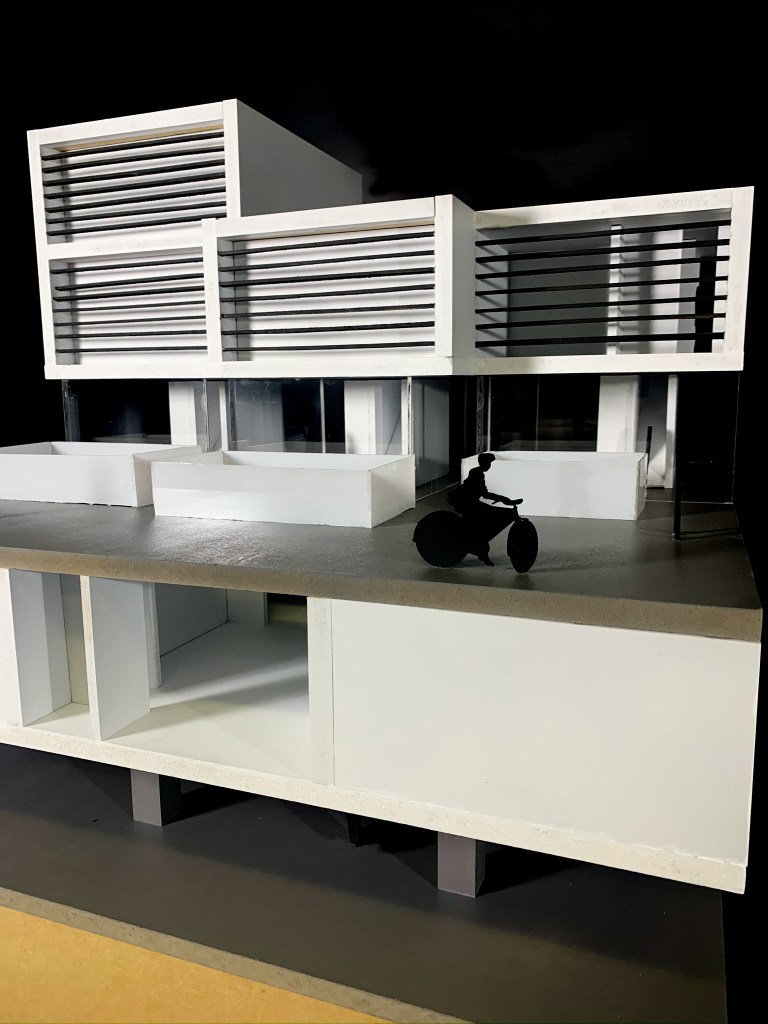

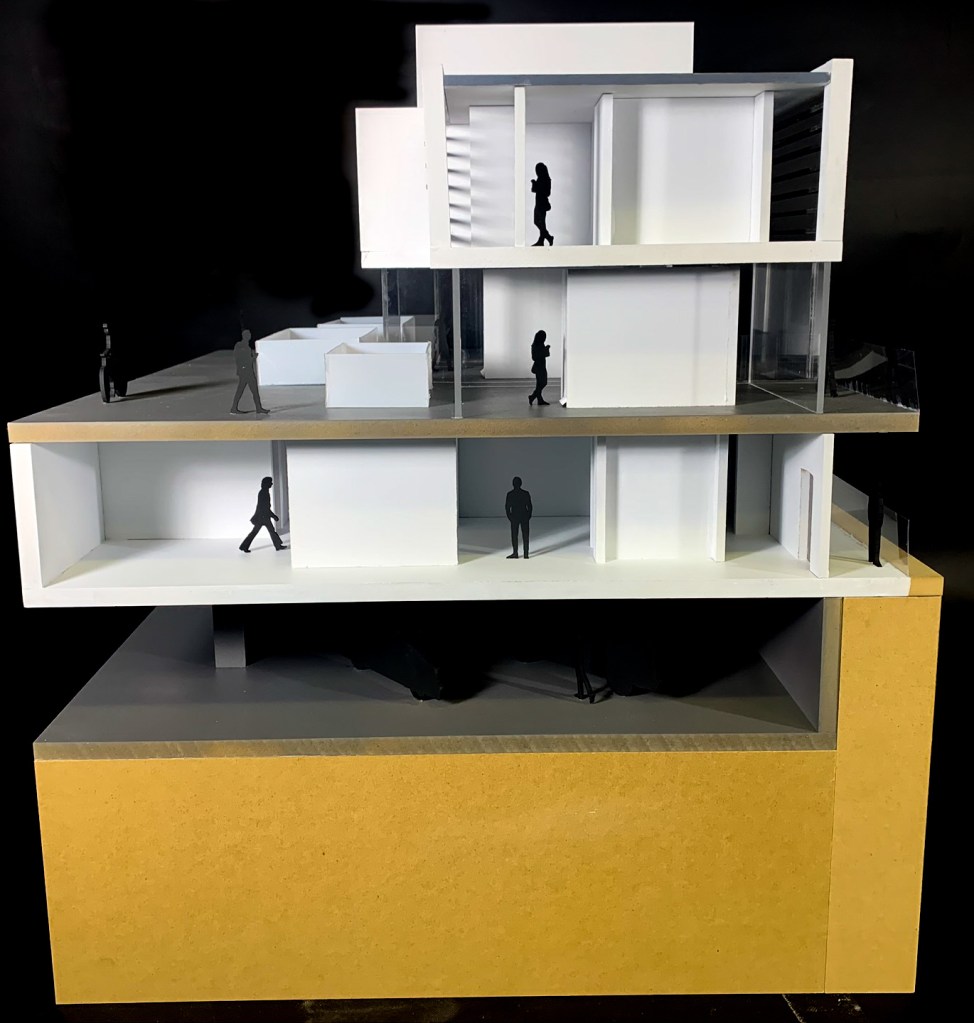


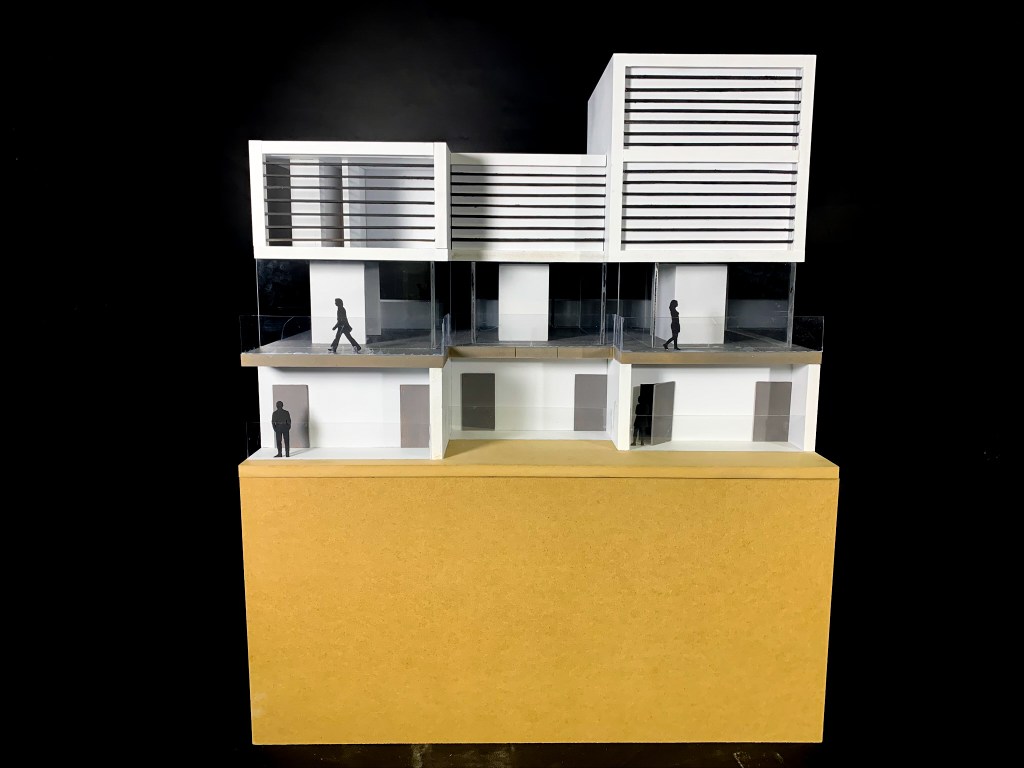
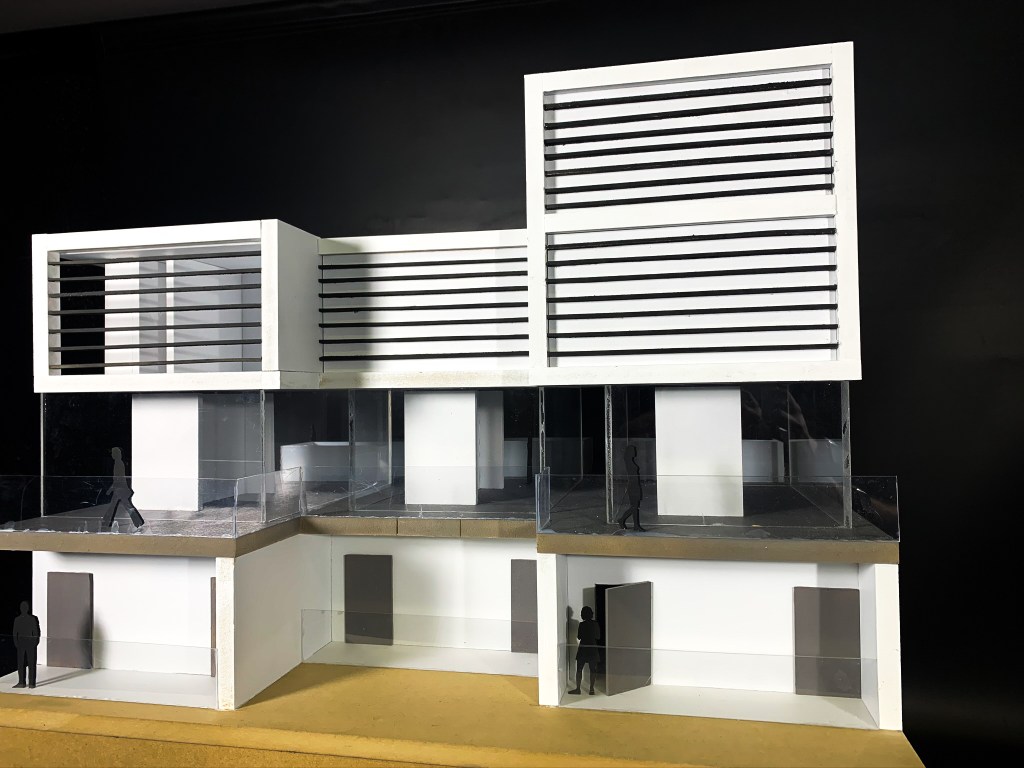
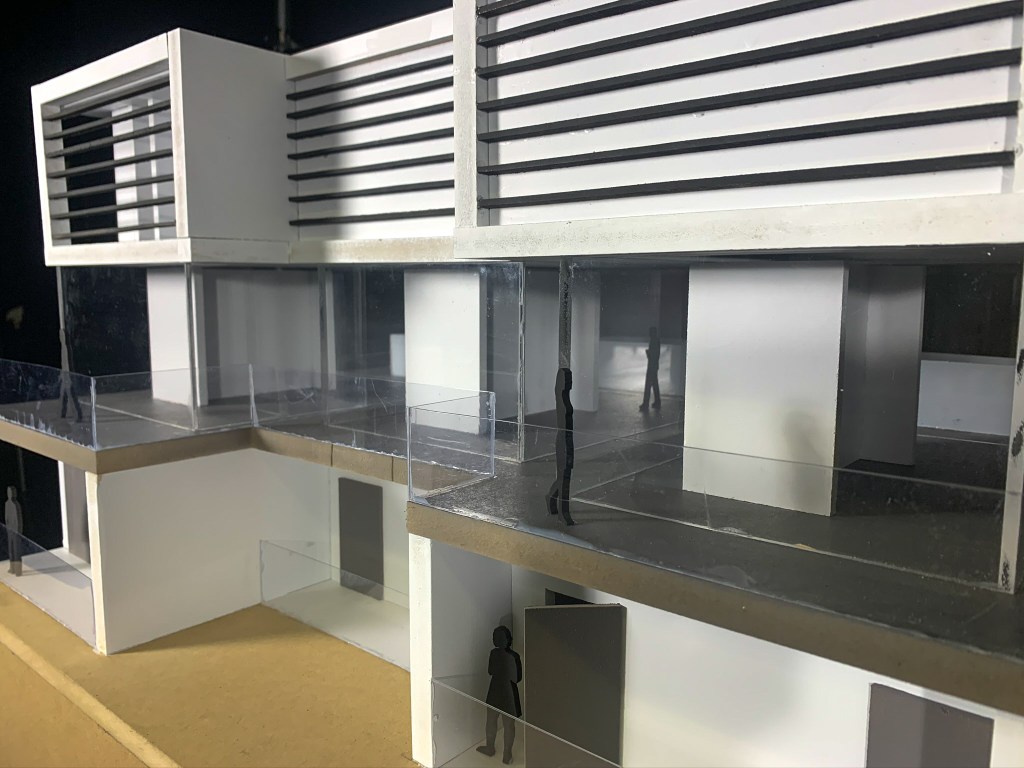
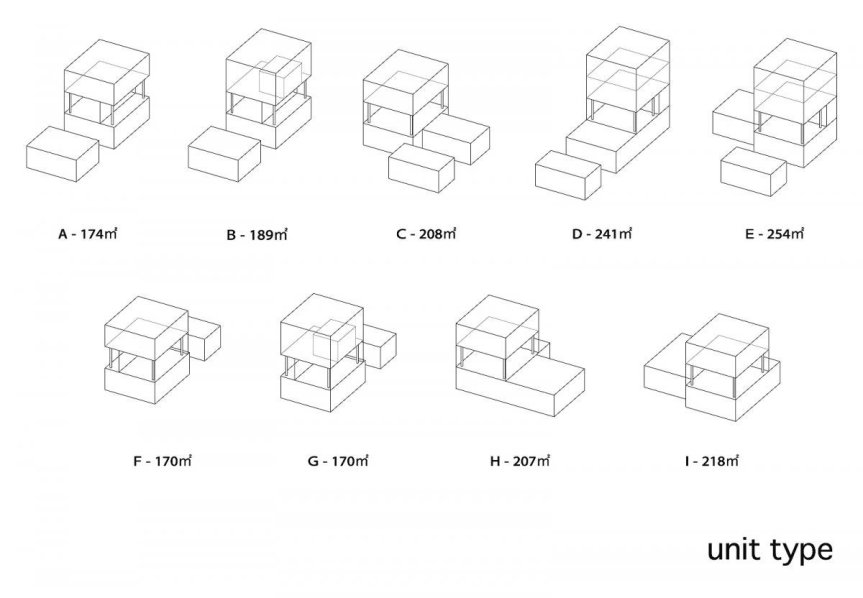
We chose to document this portion of the building because we believed that it showcased the most of Riken Yamamoto’s design. It showed different unit layouts, heights, and the shifting of the units in a cluster. The section cut also cleaning cut through the building leaving great views of the inside of the units.
Concept Model 1

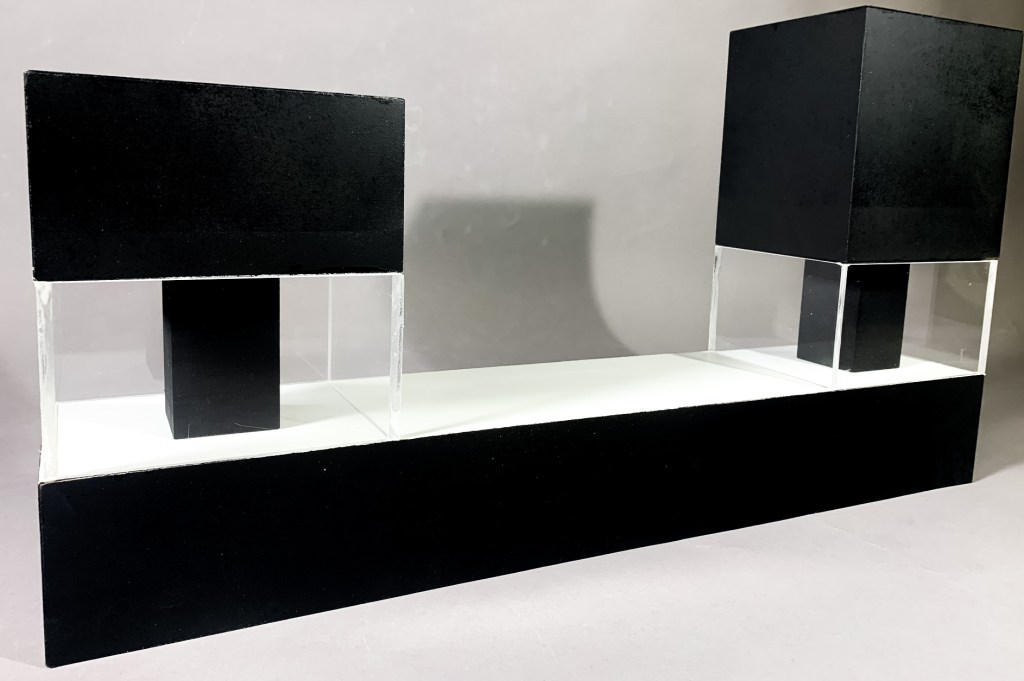
This concept model aims to harness the idea of the shared space that is common on the patio level of the clusters. The “Shiki” was designed as a totally transparent level that allows for neighbors, outside viewers, and the people living in the space to be able to see across from one buildings to another. This sense of non-privacy was intended to be a way to combine the level into one that flows from one building to another. The sharing term blend, is a way to describe this design as it showcases a way of this level becoming one common floor despite them being separate buildings.
This concept model also harnesses the idea of bundle. This sharing word describes how even though the buildings seem separated from the patio level, underneath on the main level the buildings bundle and connect to each other. This is seen in concept model one as the two buildings wrap and connect to each other underneath.
Concept Model 2

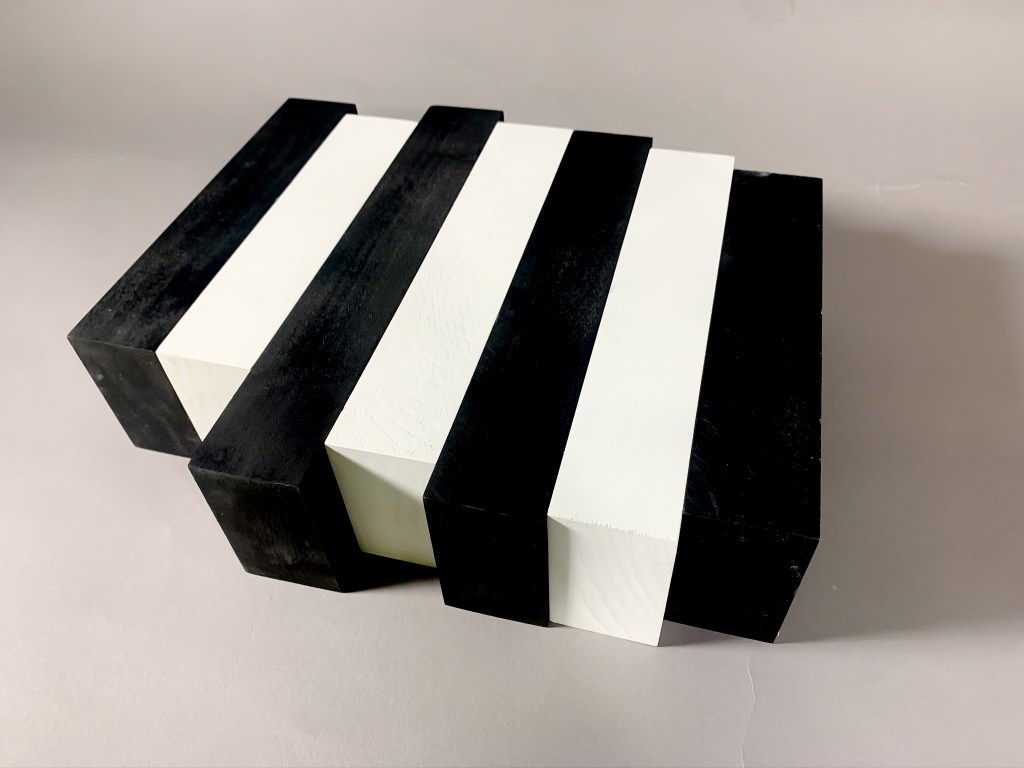
This concept model’s main idea was to demonstrate the sharing verb laminate. Each unit is mirrored on the opposite side creating a pair, these pairs shift as they move down the cluster or grouping. The shifting units create a sense of laminating which combines all the units together and is enforced by the porch seamlessly connecting all the units.
 Hathaway Section - Spring 2020
Michael & Derek,
I think you’ve got a pretty good start in your documentation and assessment of the project. I think it would be fair to say that your project is significant but does not have an outsize role in the architectural discourse of its era (unlike some of the other precedent projects). That said I think you could push a little bit further on what you’ve started to explain about the context and factors driving the design of the project. You mention a few things that make me curious to know more:
1. You mention the competition to develop “single family” houses. How do you think that was defined in the competition? Does this project strike you as single family or multi-family (or something in between)? What aspects of the design are shaping your response?
2. You also mention the client’s purpose of developing affordable housing. Sometimes it’s tricky to assess what that means in a project, particularly ones in foreign countries. But speaking generally, are their design aspects that you think were adopted with an eye towards making this project affordable?
3. On the flip side (and perhaps related to both of the above) are there aspects of the design that might have the opposite goal: to make this not seem like “affordable” housing?
4. How many different architects were on this project? How did they work together on the project? Know anything about them or where they were in the course of their careers when they won the competition?
RESEARCH
5. Units: As always I’d like to know a little more at the scale of the unit-types. It looks like we can deduce from the plans and the unit type diagrams which units are which in a cluster: can you label that cluster plan by unit type? classify each unit type by where it is used in a cluster? differentiate between similar unit types like A/B & F/G?
6. Plans: I think one is out of order, will you reorder and caption for clarity? Also, is there a plan of the parking level? Even if no parking plan exists can you diagram out how that level works at the scale of the site (using the site plan and photos)?
7. Not sure what the structure is: are you?
8. Photos: I appreciate the editing, but a few more photos would be helpful. I find that looking closely at them can give you insight into the design that might be missed if just using drawings.
ASSESSMENT
Your diagrams are a good start and I really appreciate that you’re looking at both the scale of the overall site, a cluster, and in the cluster getting at the unit layout.
Laminate: I think this is your strongest diagram of the first pass. It gets at both the differentiation between and the dense-packing of the units. I’m wondering if it could be made more abstract, 3-dimensional, and if it would also work at the scale of the site.
Public/private section: Interesting stacking of the layers. I think it works as a simple diagram, but am wondering if there are a more detailed version that interweaves the laminations (above).
View: Clearly can relate to public/private with regard to the louvers and perhaps looking at the views out of the cluster from the back units. Is this a plan diagram, a section, 3D or some combination?
I think a more detailed look at the units is also warranted. Factor in the impact of the railings at the plaza level, the depth of the facades (some louvers are close to the facade, others have a balcony between), the program behind the different facades…
LikeLike