Purpose of the Project : Find, gather and use everyday “found” object to creatively rethink “shared” concepts. Found Objects: Heart Shaped Cheerios , GoldFish Crackers, Clothespins. Found Shared Verbs: Weave, Mix, Overlap, Gather. Weave In the goldfish crackers model I was working with the weaving shared concept. The overall shape creates the circulation that weaves … Continue reading Phase 3: Documentation
Tag: 2020 spring
Tagging and Categorizing your Blog Posts
You may have notice a few changes to our Section Blog; the main one is that the homepage is now the main blog page. New (and "Sticky") posts are still at the top, but the increased number of posts has made it more of a scroll to find older posts. So... In the navigation bar … Continue reading Tagging and Categorizing your Blog Posts
Phase 2: Documentation
Sharing Case Studies DEADLINE (BLOG POST) 2/5/20 Wednesday, 2:00pm. Update your preliminary blog post about your case study. Don't delete your research and documentation from the post, but add images of your models and text as needed to fully explain the project and your models. As a general guideline and minimum for the post, make … Continue reading Phase 2: Documentation
Phase 3: Assignment
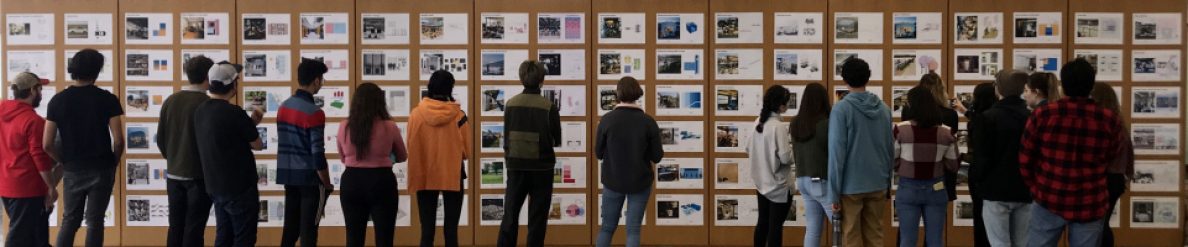
Creating Shared Spaces DEADLINES: 1/31/20 Friday, bring found objects for in-studio model-making2/3/20 Monday, 2:00pm. Informal Pin-up: min. 2 models and corresponding drawings2/5/20 Wednesday, 2:00pm. Desk Crits: 3 new models and drawings2/7/20 Friday, 2:00pm. Review Closely review the assignment posting and accompanying lecture on the studio site (always do this). Make sure you understand not just … Continue reading Phase 3: Assignment
Phase 2 Review: Case Study
Bundle: This building is an example of bundling because it creates a central space and transforms into a vertical community. The concept was to create “bundle” of houses vertically with a rectangular void in the center for gathering. Bind: This is an example of bind because the wrapping terraces connects all of the units … Continue reading Phase 2 Review: Case Study
Phase 2 Review: Case Study Studied
Weave: The circulation for mirador goes in and out and throw spaces in the building as shown in the concept model. Intersect: Habitat 57 form is a great example of this, it's composted of interlocking boxes that move, shift and rotate around as it goes higher. Bundle: Torres Blancas form is shaped based on a … Continue reading Phase 2 Review: Case Study Studied
Phase 2 Review-Case Study: Concepts
Overlap: Units overlap each other at different ends by moving them on top of each other. Intersect: The city area (public) and the houses (private) area intersect through the street arrangement. Merge: Small cuboids of different colours are merged perpendicularly with the larger white cuboid. Blend: The "shiki" is transparent allowing the … Continue reading Phase 2 Review-Case Study: Concepts
Phase 2 Review: Case Study Studied
Phase 2 Review – Case Study Studies
Bind — it is a bind because the colorful balconies bind ( combine) the units together, as they are so close together. In that way people can communicate with one another. Laminate — it’s laminate because the shifting of paired units are laminated by the court and also because they are put close together that … Continue reading Phase 2 Review – Case Study Studies
Phase 2: Marco Polo (Emily & Rebeca)
Marco Polo Location: Hamburg, Germany Architect: Behnisch Architekten Date Designed: 2007 - 2010 Date Completed: 2010 Volume: 1,440,000 cubic ft Height: 55 m Size of Residential Units: between 60 sq m and 340 sq m Number of Residential Units: 58 Description: "The Marco Polo Tower is a holistic ecological building concept. There are 17 above … Continue reading Phase 2: Marco Polo (Emily & Rebeca)
 Hathaway Section - Spring 2020