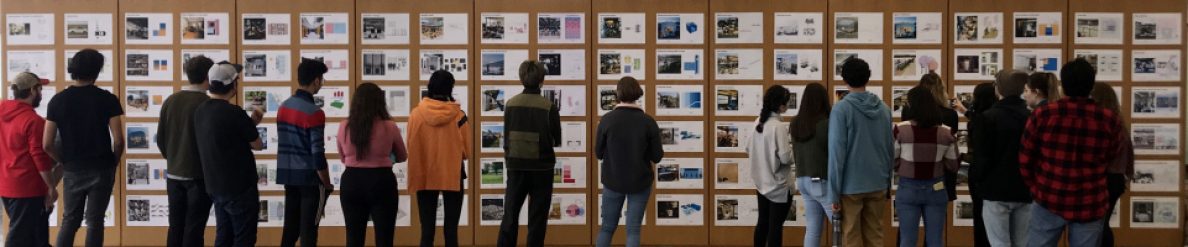
strong sequential programmatic organization linear circulation that frames views rhythm of space and expansion vs. compression variety of public and private space space saved by small "bar" kitchen programmatic organization that represents functional priorities
Category: documentation
Phase 5.1: Case Study (LoftCube)
Thomas Novak & Sarah Kay Stephens LoftCube | Werner Aisslinger | 365 sq. ft The Flexibility of an Open Plan When privacy is necessary (Bathroom)The benefits and disadvantages of using a lot of glass (Connection to surrounding vs. non-energy efficient)The use of a grid in house design and room layoutThe use of modular parts for … Continue reading Phase 5.1: Case Study (LoftCube)
Phase 5 documentation – Zeiad Amin
Using wall shapes ( Zigzag walls to create spaces like space for fridge in the kitchen and wardrobe space on the other side of the wall in the bedroom.)putting spaces in the middle of the house and provide lighting by skylightco-operate with the nature ( building in forest without cutting the trees )different types of … Continue reading Phase 5 documentation – Zeiad Amin
Phase 5: Nathaniel Staniak
Using design features in functional waysSeparation of spaces through elevation changes and sizeCreating a gradient of privacy, not necessarily through individual "rooms"Maximizing light and careful choice of fenestrationAvoiding conventions- the pros and consDesign works in harmony toward a couple common goals. From low energy usage, materials, and designing for a bit more efficiency, the house … Continue reading Phase 5: Nathaniel Staniak
PHASE 5.1: Adobe Canyon House Case Study
Cecilia Charney and Win Lei Shun ADOBE CANYON HOUSE | RICK JOY STUDIO | PATAGONIA, ARIZONA, USA | 2005 | 1,764 sq ft Diagrams Use of vernacular material (rammed earth) fits the context of the environment and is used to cool and heat the desert home.Manipulation of grid system (slide, scale etc.) to create hierarchy … Continue reading PHASE 5.1: Adobe Canyon House Case Study
Phase 5.1: Case Study (Loba House)
Use of circulation to define different parts of the houseManipulation of views with architectural elements (like beams) Being effective with one's square footage/ not having any wasted spaceDefining separate rooms with elevation changes Correlation of site to aspects of the house (like door heights and skylights)
Phase 4: Midterm
For the midterm presentation I placed a lot of focus on the different iterations of my houses on the site and how they related to my community. I connected the orientation of the different rooms from my program page to my site diagrams. I also stressed my process towards achieving the shape of my house … Continue reading Phase 4: Midterm
Phase 3: Collage
For our collage we were given a specific street in Bridgeview and were supposed to find one kind of architectural genre to extrapolate upon. Naturally one would decide to do something such as material or house details like windows, doors, etc. For my collage I wanted to incorporate an element of architecture that isn't so … Continue reading Phase 3: Collage
Phase 04: Cecilia Charney
The panel of reviewers responded well to my project, and gave me feedback in the context of moving forward with the project. They seemed to think my form was successful, but they recommended that I think about privacy and how the units will feel private and unique in the aggregation, because the unit I presented … Continue reading Phase 04: Cecilia Charney
Phase 03: Cecilia Charney
I explored the intersection of Wallace Street and West 32nd Street. I found the sunken gardens between the sidewalk and the buildings’ compelling. In my collage I captured how the sidewalk folds around the houses. Beginning as linear paths to walk along next to the houses, they then fold down along the sides to the … Continue reading Phase 03: Cecilia Charney
 Hathaway Section - Spring 2020