Populations and Programs
Populations: Young Professionals
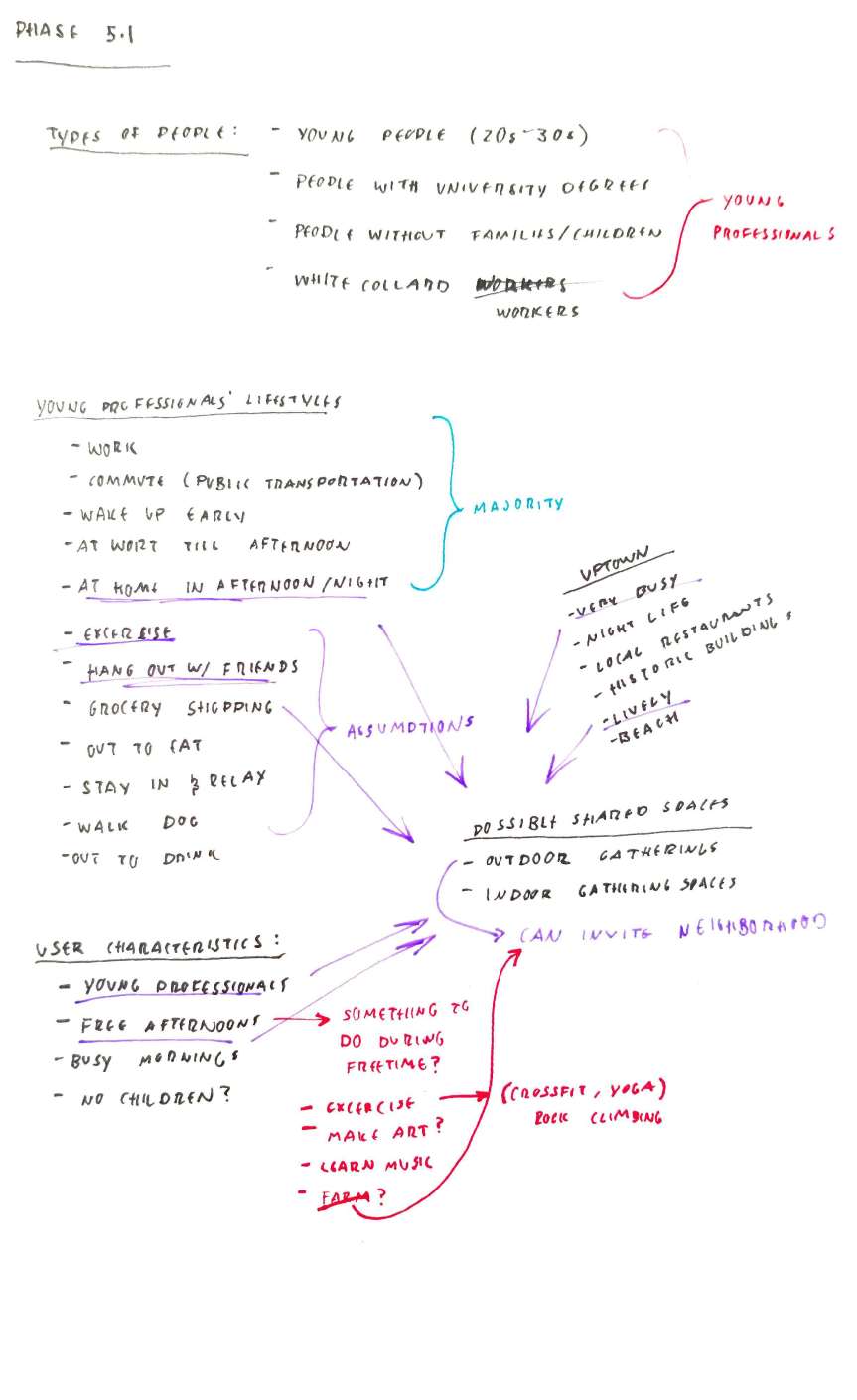
In Uptown, people between the ages 25-35 make up most of the population which can be understood by the “Population by Gender” diagram from Phase 4. Majority of the population has also attended college and received a bachelor’s and/or master’s degree. Most of the Uptown residents also do not have families or children.
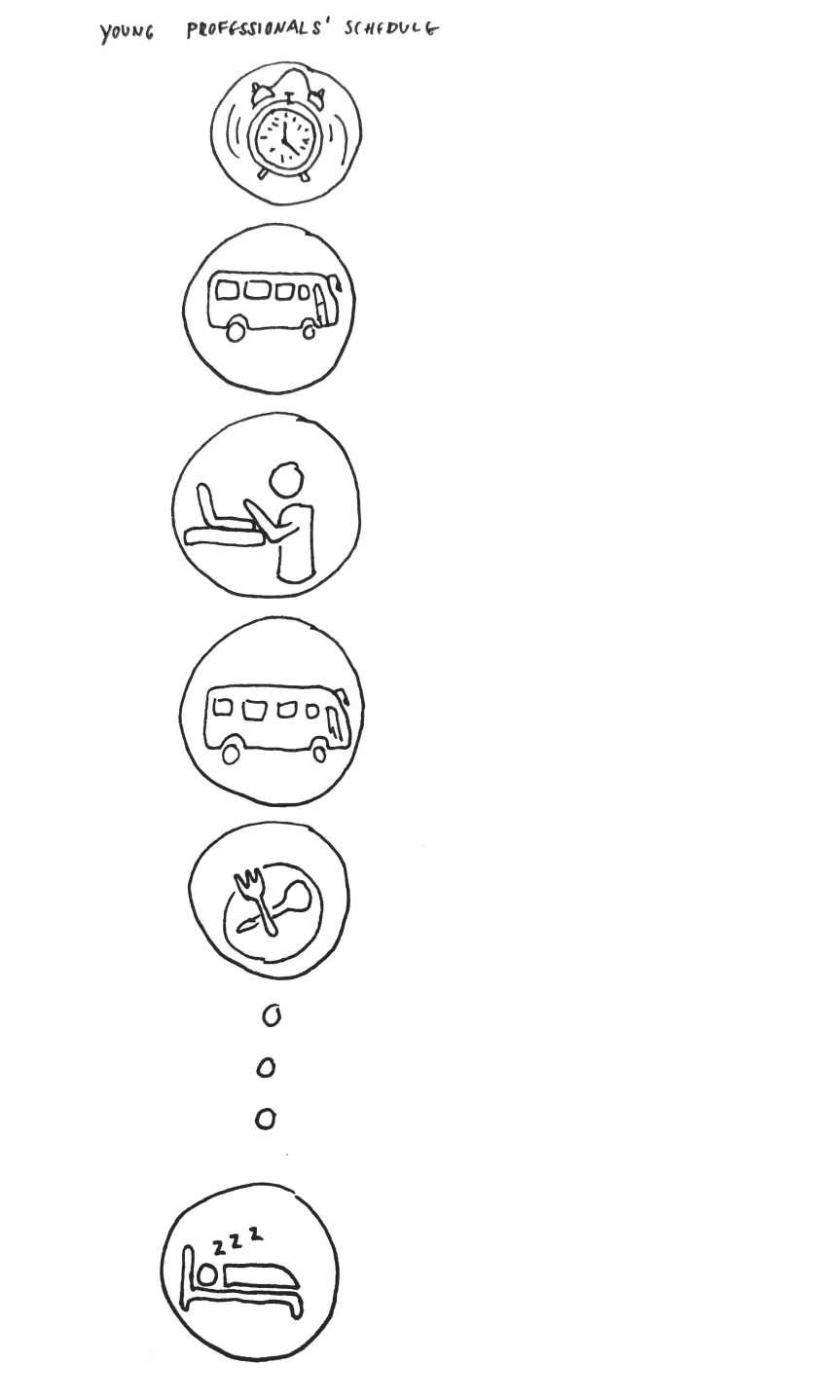
The young professionals share a common lifestyle and or routine. It can be said that most of them wake up early in the morning to go to work on public transportation or by car which can be seen in the “Commuter Preferences” diagram. Most of the intended residents have white collard jobs in the loop area. They usually do not return from their jobs until the afternoon. After work, they have a lot of free time for themselves since a lot of the residents do not have families of their own.
This group of people can be seen living together in a way that is very interactive and engaging. Many young professionals come out of college and move into the neighborhood knowing few to no people. This encourages the residents to meet others in their own apartment complex or in the Uptown community as well. The group of residents is very young and can be assumed to be energetic and interested in occupying their free time with recreational activities since they live in a very lively part of Chicago.
Programs: Cross-fit, Urban Farm, Local Music Venue
Since most of the young professionals are free in the afternoon, it is important for the programs to accommodate their schedule and be of their interest. There seems to be an interest in physical activities in Uptown since there are several gyms, parks, biking opportunities, and general outdoor spaces; especially on the lakefront. However, there are not many fitness centers near the site. It would be essential to place a fitness center in closer proximity to the site since it would attract more users and encourage sharing and interacting.
Urban Farming or community gardens have a lot of potential for gathering people from the residents and Uptown Community. There are no community gardens near the site so it would be ideal to place one in which the community has access to help cultivate and access to fresh food. Urban farming is more of a physical activity that is open to more of a general group. It is an activity that an energetic and lively population could potentially want to be part of.
After a day of work, the residents have a lot of free time in their afternoons. It can be assumed a lot of them come home tired and want to relax. A good way to relax while also interacting with the community would be a small music venue. There are theaters and music venues already located in Uptown but they mostly serve famous and popular artists. This music hall can be for local artists who want to perform in the community. This can additionally add to the night life and encourage the community to engage with the building and residents.
Sharing:
Phase 1:


Phase 2:

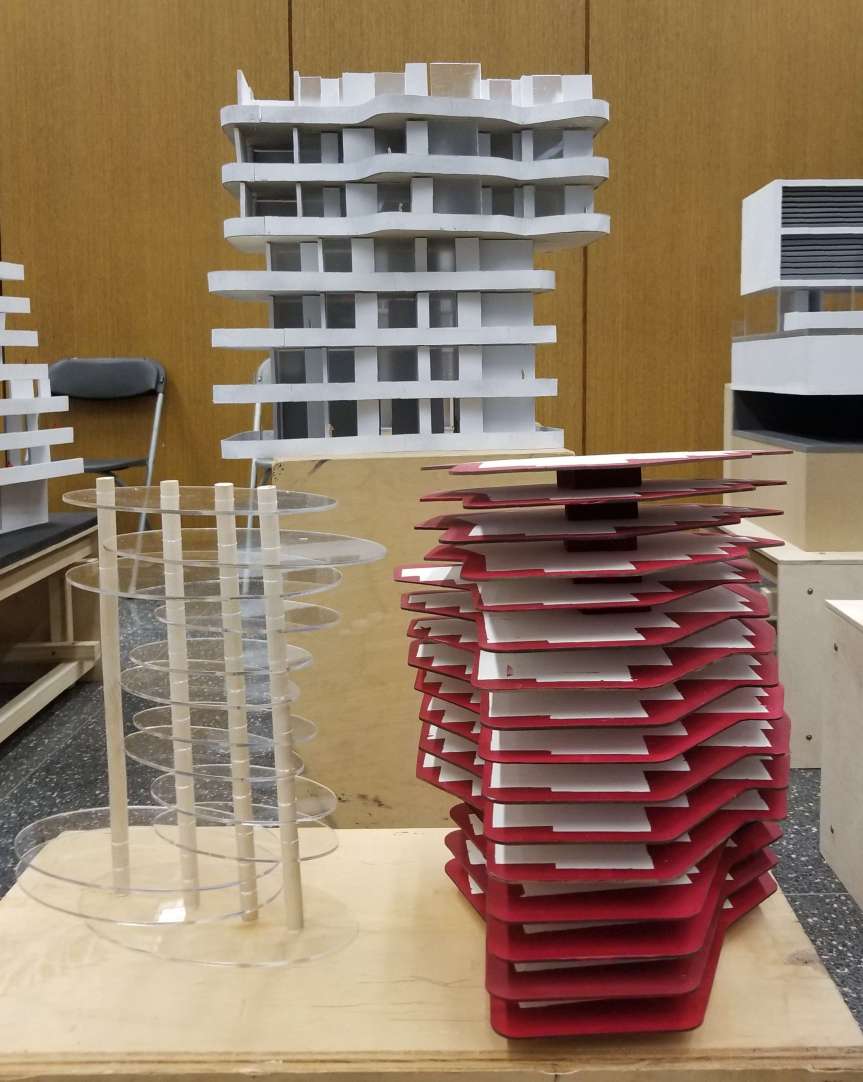
Phase 3:
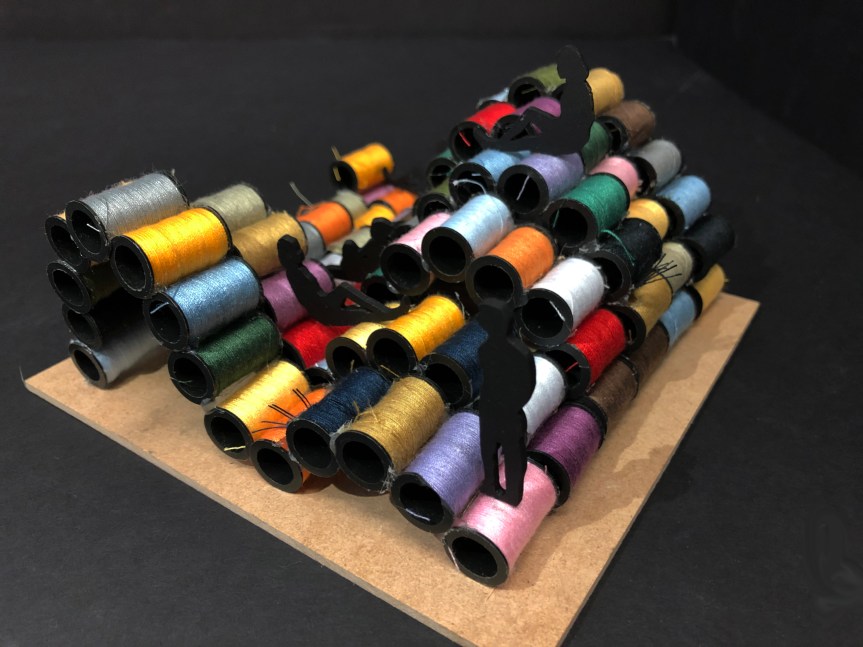


Precedent Examples:
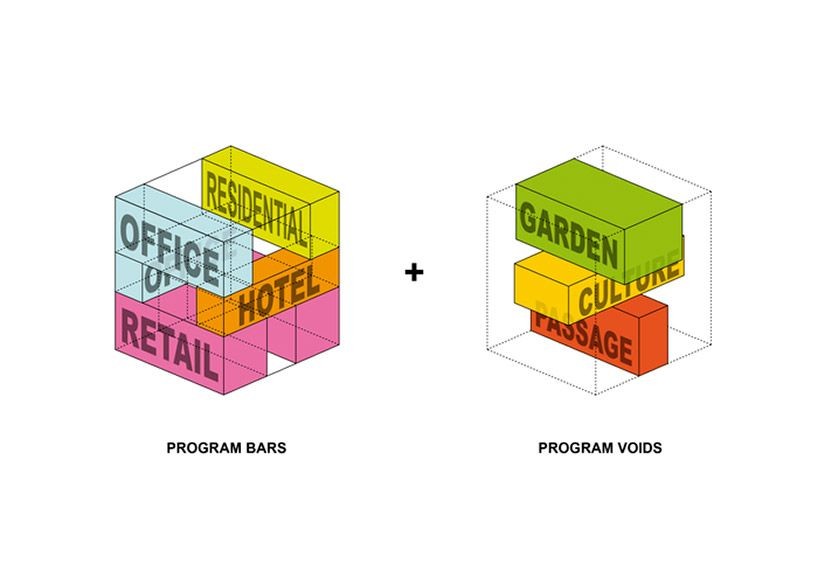


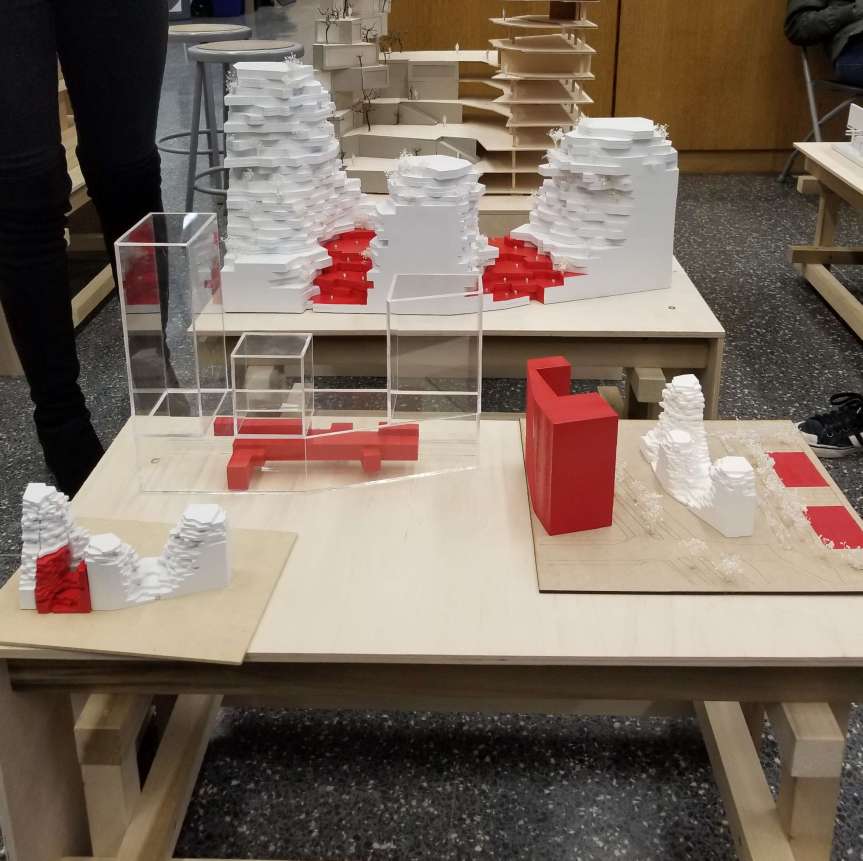
This diagram shows different ways the basic programs can be arranges.
 Hathaway Section - Spring 2020
Ruth,
Your examples are all clearly chosen to relate. The good news is that makes it really clear what you’re interested in. On the flip side there might be a broader set of ideas you could draw from even if you’re not sure how it would apply. If not before, look for additional ideas/precedents on Friday.
Whether it’s cheerios, spools of thread, or even the aluminum tray shreds you’ve got a consistent set of ideas working at a smaller scale:
– aggregating a unit to create a larger surface (and smaller more private areas within)
– occupying both above and below the surface
– suggesting use and grouping without fully enclosing a space
So it seems like that should be a part of your project!
But I also think you could revisit that phase to look for additional precedents that operate at a larger scale- anything that speaks to you where the people were tiny little sticks?
The idea of “interconnection” from your Phase 1 precedents makes sense and I like that this can be at the scale of two people in a chair, a group around a table, or applied at larger scales of gathering with either a physical or visual connection.
Also consistent is your selection of precedents with outdoor space, which is fine, although I’m not sure if at the scale of your lot it will be a “big” idea. We’ll probably be talking about this a fair amount on Friday. Do you see this outdoor space as the cheerios/thread surface (like The Valley)? Or are they two different things?
I like that you’ve started your diagrams (boxes are fine). To develop them try upping the quantities/scale and giving them one clear “idea” or “principle” that is organizing them (and label them). For example try:
10 small boxes of residential units
1 large “venue” that is a sloped surface of seating (something else can occupy the underside)
1 medium “cross fit” box (or broken into smaller boxes)
You could arrange program “around” a central courtyard, a “valley”, an idea of visual connection between spaces…each would be a different diagram. Then try “weaving” the residential units or…
LikeLike