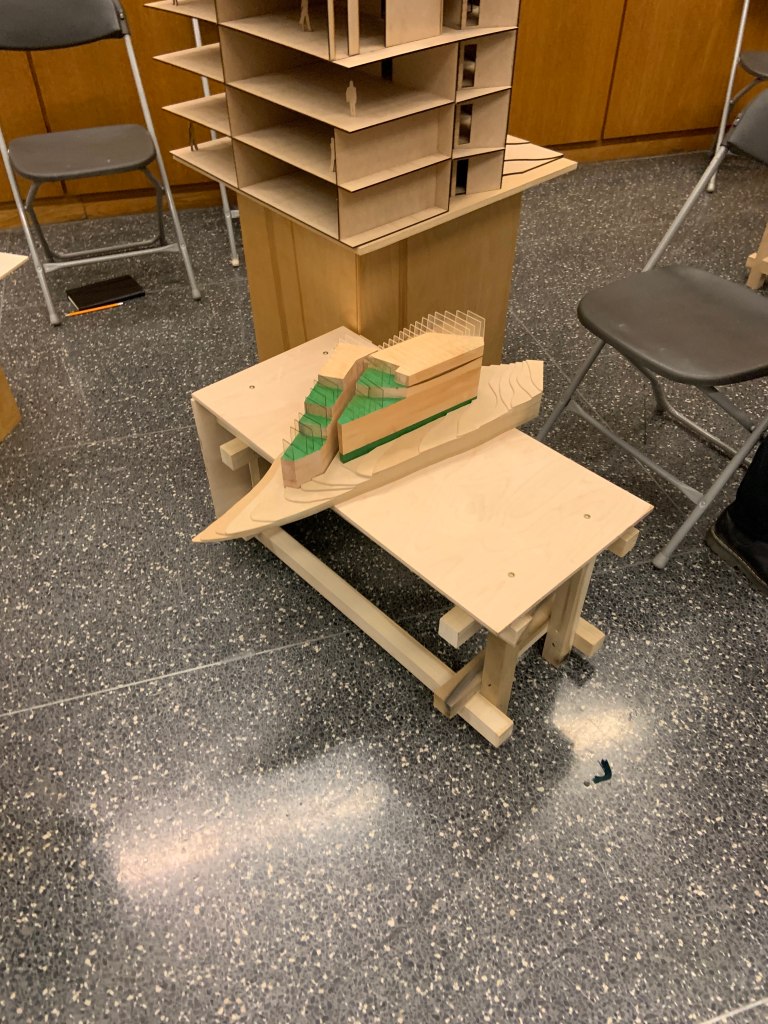
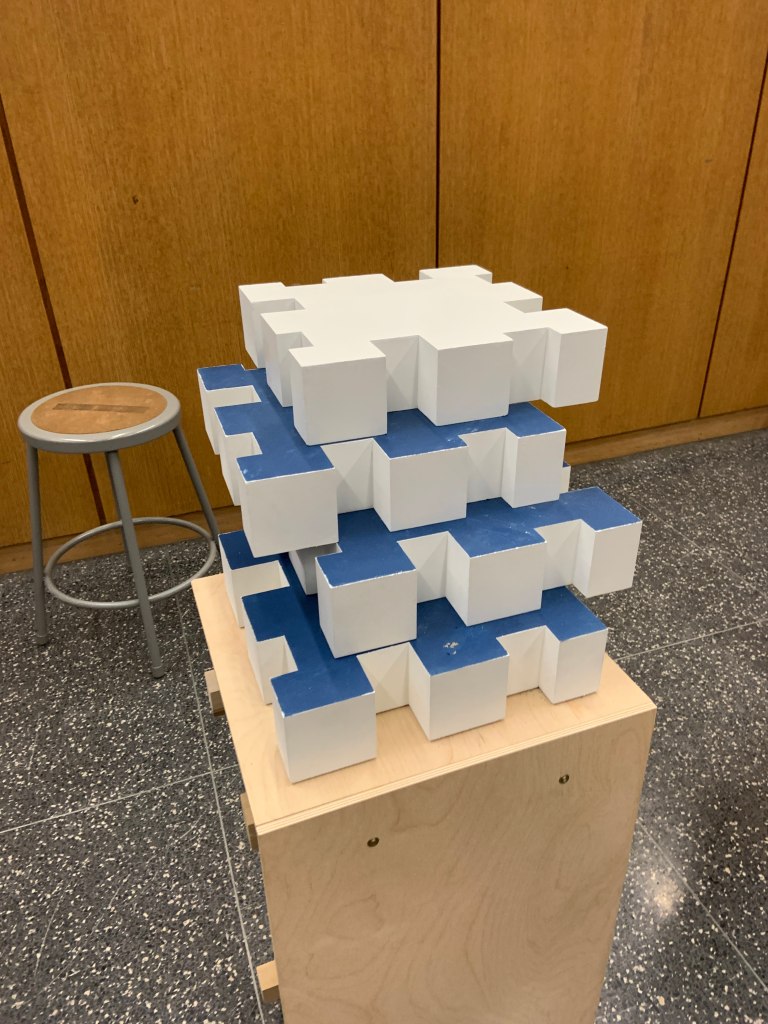
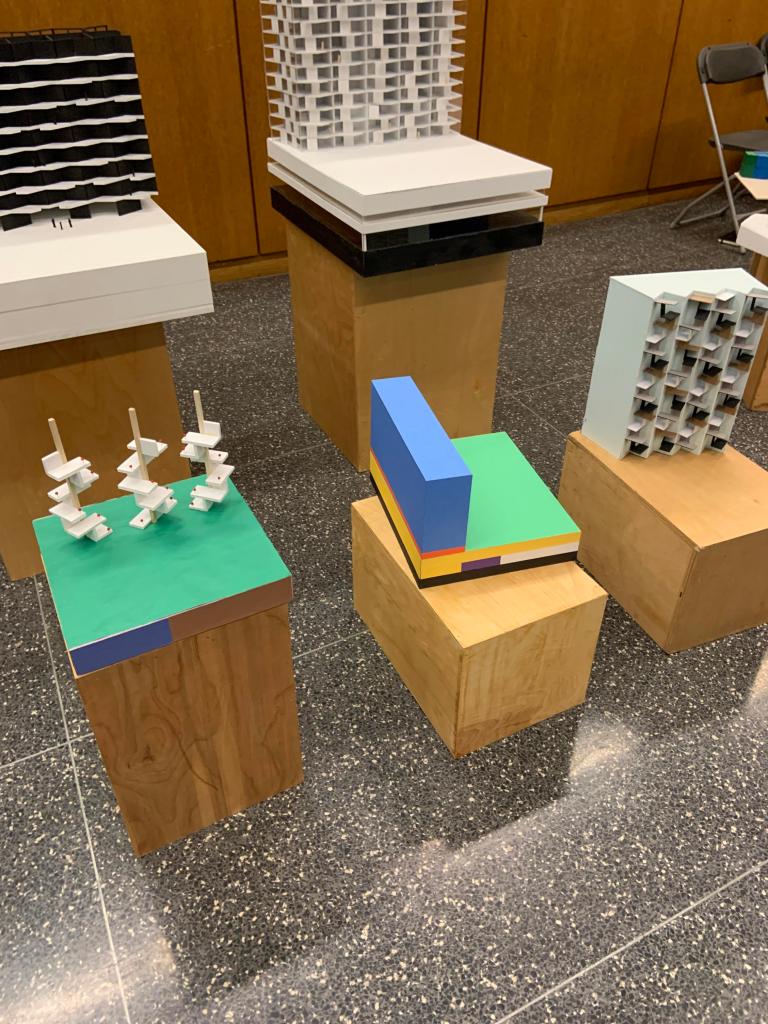
Weave: Mirador by MVRDV weaves the different units and types together with one circulation path. I thought it was interesting how this building expressed this circulation on the exterior.Mix: Unite d’habitation is an example of mixed use similar to the Goldberg projects in this excersize. I like the way the floors interlock to enhance the living conditions of each unit.Gather: This model didn’t end up getting presented to me because of the review structure, but I think it was a model for Star Apts. I liked the graphic language of this model which clearly conveyed some amalgamation (or gathering) of disparate parts.Blend: I liked the idea of the colored model in the foreground and how it attempted to use gradients to show public and private zones in each unit and how the unit types are interlocked to form the mass of the building of Kitagata.Bundle: Torres Blancas is organized into a bundle of towers.Merge: The group that presented this described SL11024 as a “blend” between landscape and architecture. I think it is also something of a merger between form and context, and I like the idea that it is so literally expressed in the architecture.Bind: Zoey and Trevor’s model for WoZoCo was a good expression of how the additional units were bound to the side of the building. Overlap: Habitat 67 is a great example of using overlaps. The cubes intersect, and the overlap left over informs how people engage with the architecture. Also, what a model!Laminate: This model for City High Park clearly shows how different programs are laminated.Intersect: It was interesting to me how the Amsterdam Orphanage created a space for each gender and age group, but also provided intersectional spaces for them to coexist.




 Hathaway Section - Spring 2020