Research
WoZoCo Apartments
Architect: MVRDV
Location: Amsterdam, Holland
Built Between: 1994 – 1997
Commissioned by: The Het Oosten Housing Association
Size: 9 Story Mid-Sized Apartment Building. 100 Units in total, 87 in the main building, 13 cantilevered
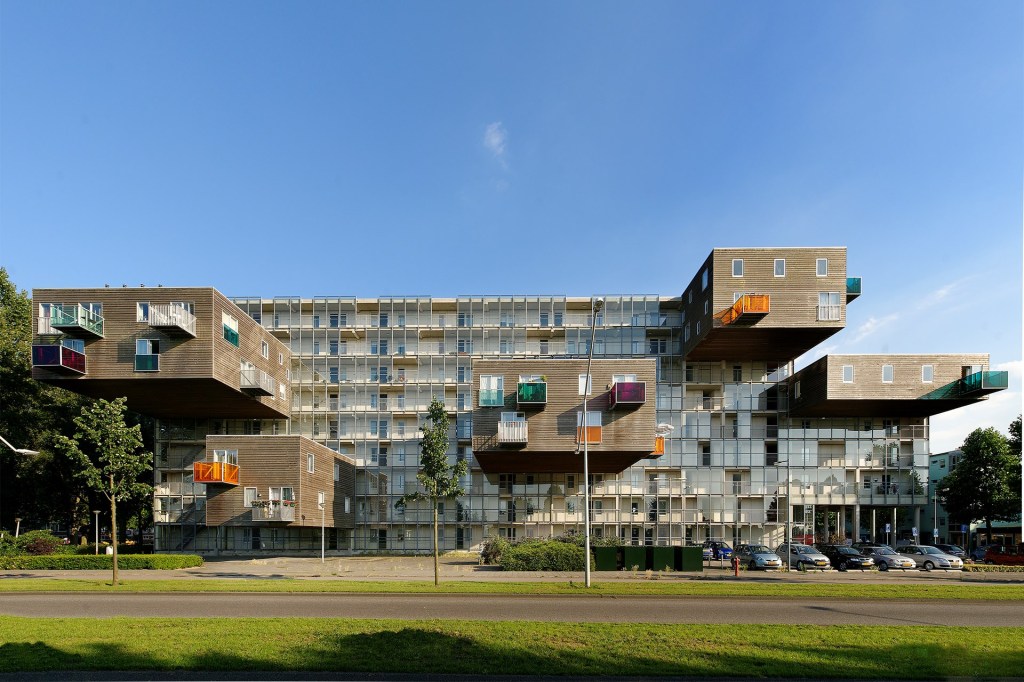
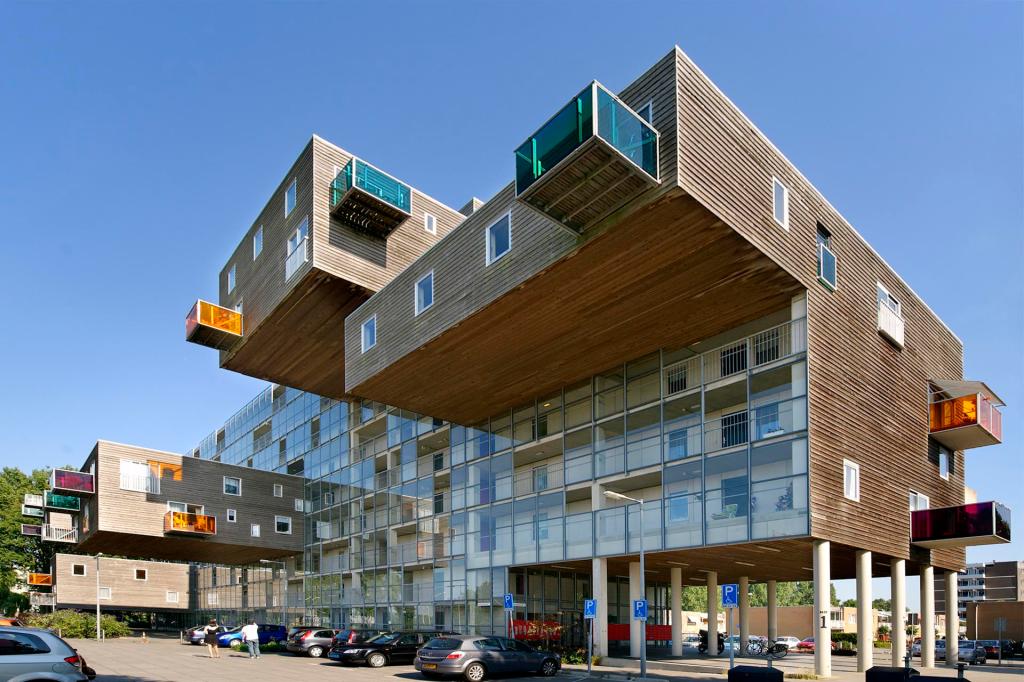
Description: The shape of the main building is a rectilinear prism, with cantilevered smaller rectilinear prisms on the north side of the building. On the south side of the building, each unit has a balcony. The balconies contain either small lounge areas, or small garden areas. The balconies have different colored glass varying between blue, light blue, magenta, orange, and green. On the interior, the layout of the building is simple. Each unit has a kitchen, living space, bedroom, bathroom, and storage space.
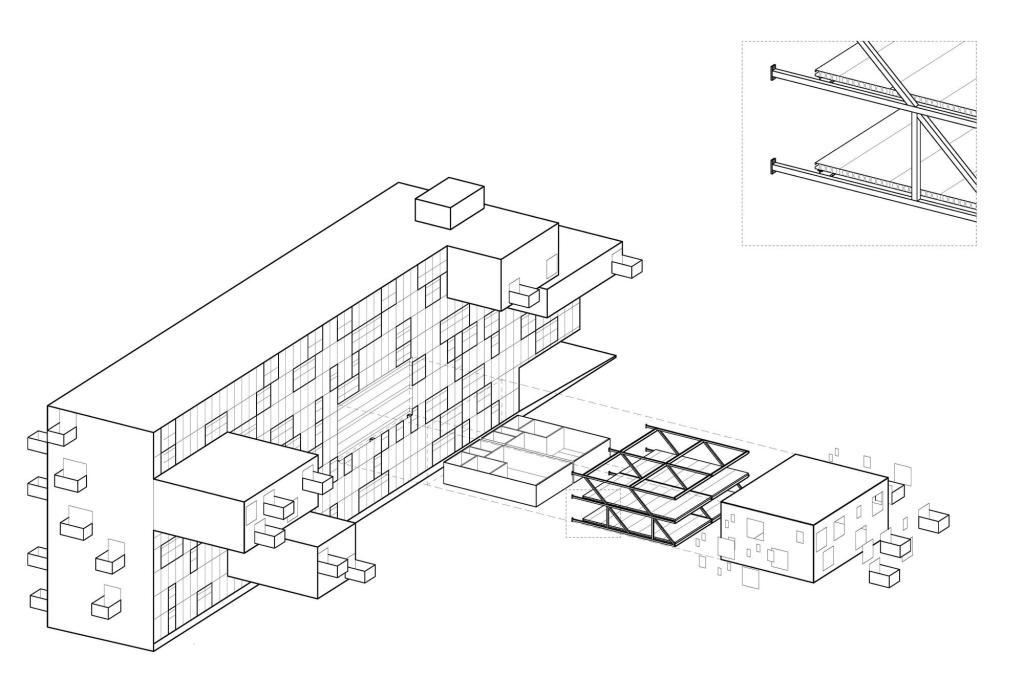
History: Wozoco is the first housing complex completed by MVRDV. The client, a large housing corporation, required for 100 units for elderly residents. Preliminary studies showed that the site could only fit 87 of the 100 units, so MVRDV was brought onto the project. A half-joking solution was presented that the additional units should be “glued” to the side. The structure of the floating boxes is within the main block of the apartments, creating a sense of instability in their connection to the thin wall on the north facade. The simple apartments in the main block have their own unique character through the random size and location of windows and balconies on the south facade.
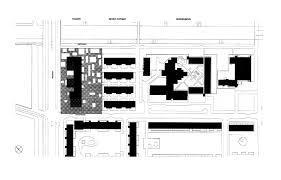
Drawings:


Photographs:


Response and Analysis
What We Find Interesting: Some aspects of this building that we find interesting is how the cantilevered units. These units, at quick glance, don’t look structurally sound. But when we researched further we discovered their unique structural system. We also found it amusing when the architects realized they had an extra thirteen units to place, they proposed to “glue them to the side” of the main building. We also find the windows interesting, in terms of placement and size variation. It appears there is no particular rule or order to which sized window goes where, they are just placed where the architect feels is correct.
Diagram Sketches:


Architectural Importance: Wozoco apartments are important because the density of the Netherlands is increasing so new means are created to deal with increased population. This gives MVRDV the ability to create innovative designs on large-scale projects and the incentive to find solutions to practical issues through creativity. Wozoco is a prime example of thinking outside the box and being innovative through design.
Impact of Site and Context: When adding the additional thirteen cantilevered unites, the architects had to consider the neighboring buildings, and how sunlight and shadows would effect them. To optimize the amount of sunlight the additional thirteen units received, they were placed on the north side of the building. By doing so this also minimizes the shadows castes on the neighboring buildings.
Model Documentation
Detail Model: The main focus of the Detail Model is to show two cantilevered units being attached to the glass facade, hence the cut of the building showing the cantilevered units in full. It was important to show this because we felt the other aspects of the building were covered in the concept models. We think the sticks and the cantilevered units accurately represent this side of the building.
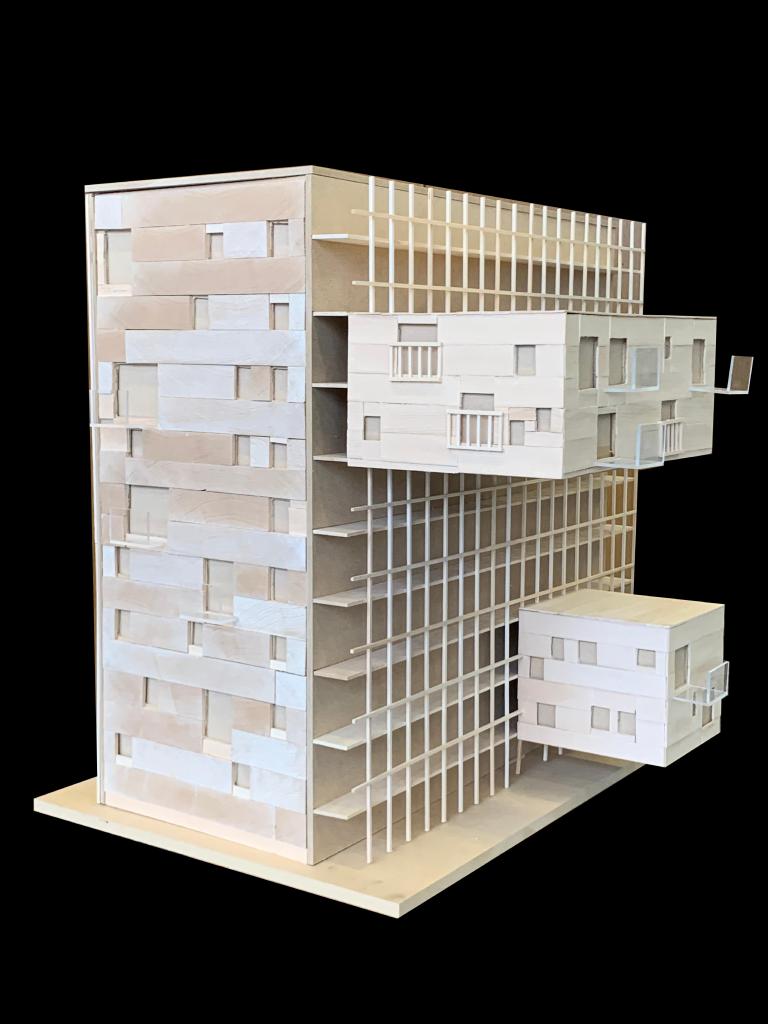

Concept Model 1: Bind
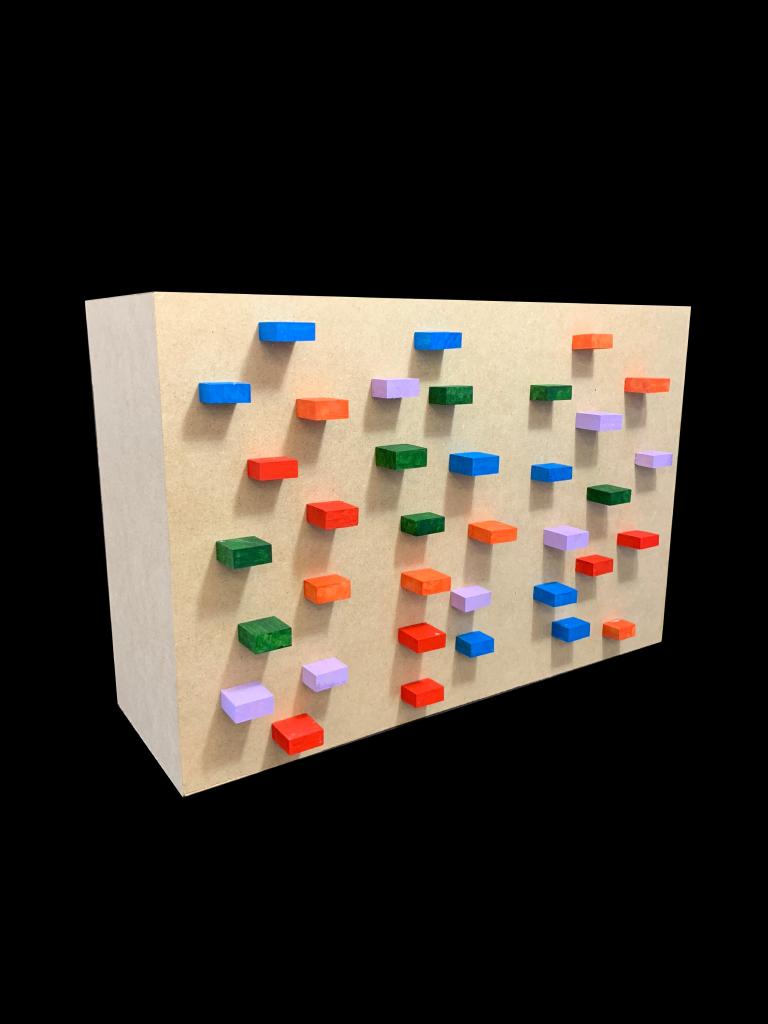
Concept Model 2: Bundle

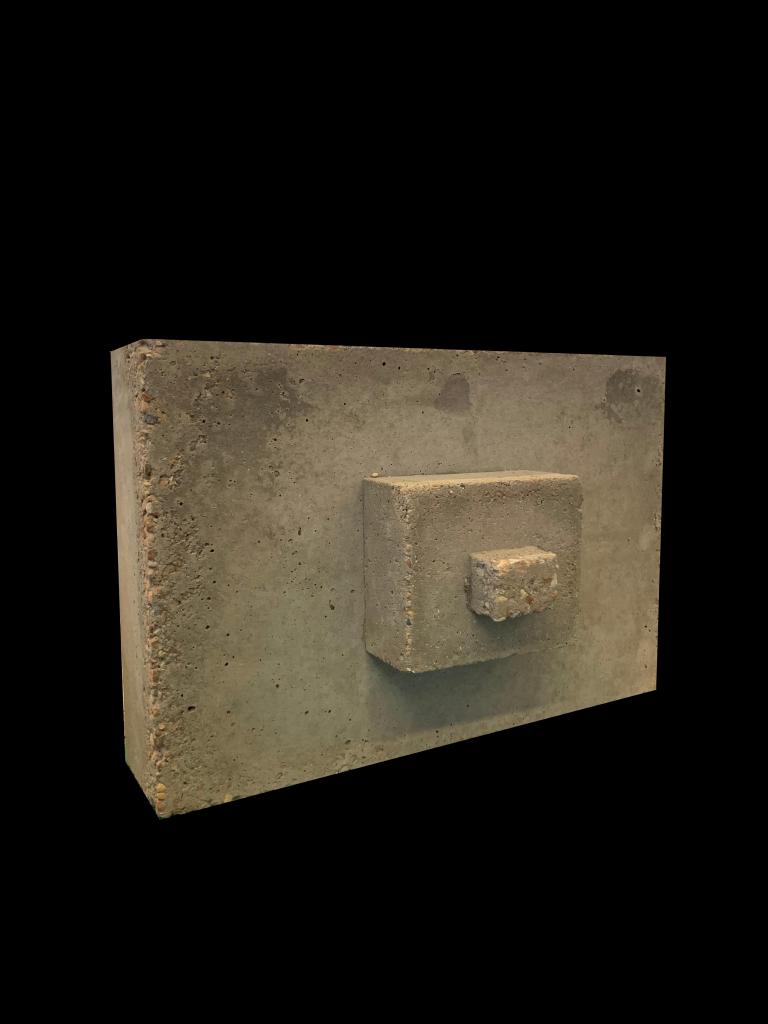
Concept Model 3: Laminate
 Hathaway Section - Spring 2020
Trevor & Zoey,
I don’t want to spend too much time on the significance or the “story” of the project, but I think you’ve correctly identified them and they are important so I’d like you to delve a little further into both. Let’s start with the story of the 13 units. For Wednesday let’s fact-check it and try to understand it a little more:
1. Are there indeed 13 units “glued” onto the one side? Can you verify on floor plans?
2. What do you think they mean when they say the 13 units didn’t fit? Granted we don’t know the zoning or other constraints on the building, but looking at the size of the overall site and looking at the notched out areas at the one end of the building, what do you make of the claim?
3. However you assess the situation, put yourself in MVRDV’s shoes in proposing their design for 100 units. Taking as a given the design they proposed and the story they told, why do you think they chose that design?
Maybe the best way to approach the significance is two-pronged. Building on your answers to the above:
4. As you said, this was MVRDV’s first housing project. That’s significant, why? Can you also find out where in the overall history of the firm the project came? How long had the firm been in existence, how many projects completed? how well known? (Also, why do you think I am I bothering to ask about this?)
Finally, I’d like you to look at the broader context of the architectural world in the late 1990’s; specifically, can you explain dutch architecture and its role in global architectural discourse in the 1990’s, and then locate MVRDV and Wozoco within that? I know this is probably not something you’ve studied so a couple suggestions to look at (that might also help build your bibliography):
5. Publications from the 1990’s on Wozoco and MRVRDV. You may have already found some of these looking for drawings and photos. Now ask yourself, how were the project and the firm written about at that time?
6. Concurrent primary source: S M L XL by Rem Koolhaas. When was it published? What was in it? Who was the author (not name, but significance), Was it important?
7. Secondary source: Superdutch by Bart Lootsma. At the very least, read the introduction for an introduction to and assessment of the importance of Dutch architecture of that era.
Moving on from the context, and to some extent from the big move on the cantilevered units, I think we can look closely at the small architectural decisions MVRDV made. Can you answer the following with diagrams?
1. Building arrangement: program and circulation. How does it work? (diagram program and circulation in plan)
2. Facade: What are the materials used, where? Do they correspond to what’s behind the facade? (3D diagram, exploded axon?)
3. Site and Context: The building divides the site into two sides, or halves. How are they different in use on the ground plane? In surrounding context? solar orientation? other? (what diagram shows this best?)
4. Structure: You got the cantilevered units, what’s the rest of the building structure? Is that significant? (Can you simplify the 3D diagrams from the architects to a more generalized diagram?)
I like your diagram of the shifting scales of the “protruding objects” Given that there doesn’t seem to be a lot of “sharing” what can we talk about formally in the building: do any of the verbs from the assignment apply to how the units come together in a building? what do you think the role of the balconies are? the role of the protruding units? Looking at it from another direction, is there anything in the design of the building that marks the individuality of each unit?
LikeLike